Saturday, 14 January 2017

Before the year was out - Part 1


2016 couldn't and didn't end without further Letterboxing walks. Alas, the time to blog about them at the time eluded me!

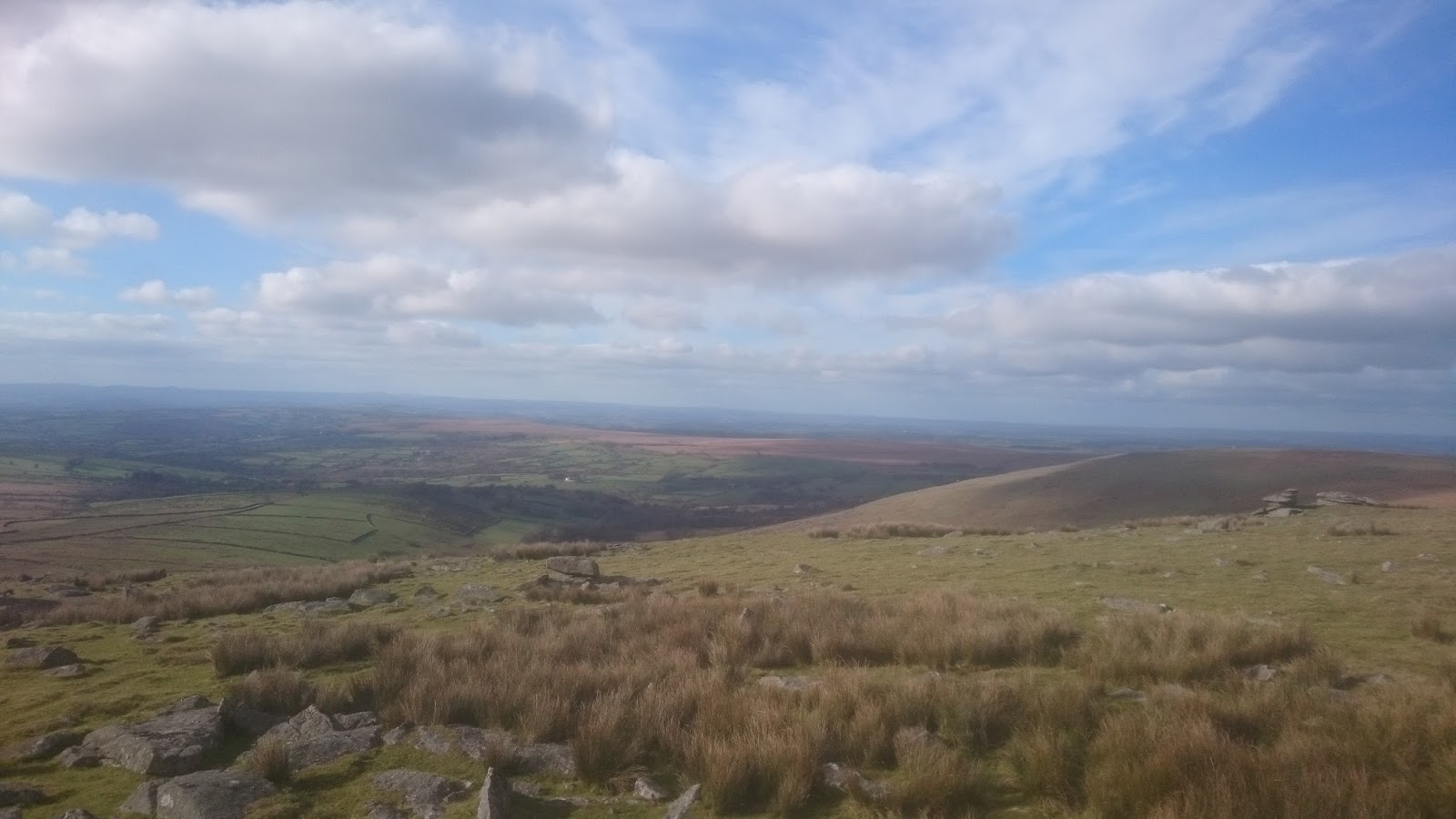
Firstly, I made the long overdue return trip to Bodmin Moor.  The 'Southerly' peaks of Trewortha Tor and Hawks Tor proved a stunning destination.  I turned it into a round trip including Kilmar Tor and Sharp Tor - which I visited on my last trip here in 2015.  Since the weather was grey and visibility poor, today at least I was grateful to be walking on Bodmin's lower slopes than up in Dartmoor mizzle.

If I learnt one thing on this day, it is that access to Hawks Tor is limited.  There are few official ways in to this conservation area/public access land.  I found one way in, though I had every intention of finding another one out.  This restricted access ensured that Hawks Tor was overgrown - even by Bodmin Moor standards. Deep, lush foliage twinned with tall gorse made the going rough and tough as I approached the crumbling, unvisited granite stacks atop the airy ridge.  Passing the overgrown quarries and walls sparked my imagination.  I half expected the legendary local Beast to leap from it's lair as I beat my path to the Letterbox (only one here).

I negotiated through the vegetation, and soon found myself on the way to the neighbouring Trewortha Tor.  The direct route however was blocked by a series of barbed wire fences, coiled razor wire and high wall.  This was not intended to deter errant sheep and deer.  This was here to trap, cut and decapitate walkers like me.  With no obvious way around, I had to accept that the only way out of Hawks Tor was also the only way in.

Trewortha Tor was unlike anything I'd yet encountered.  Never before have I seen so many logan stones, gravity defying rock piles, and surreal landscapes on one tor.  I was happy to spend a few hours exploring the Tor, and found several Letterboxes in the process.  Visitors book entries indicated that this part of Bodmin Moor is rarely Letterboxed.  On a dry, wind-less Saturday, I saw one other individual all day, and that was on Kilmar Tor, which was where I headed next.  This immense ridge filled my view, and made for an interesting climb to the summit trig.  

The sun started to break through, so the remainder of my walk was a bit warmer.  Although I had no further new Letterboxes to find.  


A fascinating day overall. An unknown distance walked, and 9 Letterboxes found.

Monday, 21 November 2016

Northern exposure Part 2


Some Letterbox walks simply don't go as planned.  Take my latest, for example.  It has taken three attempts to complete my circuit of the 'track-formerly-know-as-the-Ring-Road', South of Okehampton Camp.  On each occasion I have parked at Hart Tor and the adjacent Observation Post.  I was time-bound on my first outing, and I only made it to Deep Ford.  My second attempt was thwarted by poor weather, Mist gave way to drizzle which gave way to heavy rain.  I barely made it to East Mill Tor.

Yesterday, however, on a cold, crisp morning, I tried again...

3rd time lucky...
Storm Angus, which struck the previous day was still running off the moor.  Water levels were high, but not extraordinary.  Deep Ford was not impassable.  Indeed, I saw some members of the public in a Land Rover ignore the warning signs, and drive around the military track negotiating this watery crossing of the East Okement with minimal concern.

I was determined to reach the highest point of the former Ring Road.  Observation Post (or OP) 15. I recall learning about this fabled spot through the visitor's book of the Letterbox in the Warren House Inn, way back in the early 1990s.  As novice Letterboxers, the family were eager to reach Cranmere Pool via the quickest and shortest path possible.  Parking at OP15 provided this path.  Today, it is over 3 miles on foot (unless you own a Land Rover and ignore rules) to reach this remote spot.  I had a number of Letterboxes to find up on the plateau.  However, it was other man-made objects which surprised and disappointed me on this occasion.

I am well used to finding abandoned (non-explosive) Military debris within all the ranges on the Moor.  Yet, never before have I seen it on such a scale as I did yesterday.  I counted 4 empty flare casings and 3 heaps of empty cartridge shells and clips on Okement Hill alone. 

I believe that before leaving a range, the Ministry of Defence (MOD) range wardens expect visiting army units to clear up and care for the environment.  I am aware that there has been no live firing in Okehampton range for over a week. Who knows how long this stuff has been out there!  In light of the advice of military notices everywhere ("DANGER Do not touch any military debris.  It may explode and kill you"), I didn't pack it up and remove it myself.  I tutted and left it behind.  In hindsight, I should have recorded the 10 figure grid reference and reported them to the Defence Infrastucture Organisation.  Its worth noting that the Dartmoor National Park Authority advice is to report finds of suspicious military material to the Devon & Cornwall Police non-emergency line.  The DNPA website lists the old Police number (switched off in September 2012), but the new number is 101, which works from mobile phones too.

I hope that MOD cutbacks are not impacting on their obligations to protect and care for Dartmoor's rugged, beautiful environment.  Perhaps, we'll see learn how tight the budget is in the latest minutes of the Dartmoor Steering Group.  This MOD focused party had their annual meeting at Okehampton Camp last Wednesday, and the meeting minutes are yet to be posted online as per their own rules. Rules, as we have learnt, are there to be broken.  Aren't they?

The sunshine faded away early.  The temperature plummeted, and I descended beside the Black-a-ven Brook and New Bridge, completed my circuit, and headed for home.  Mission achieved, and 21 boxes found.

Thursday, 17 November 2016

Northern exposure Part 1


It has occurred that I haven't walked much since my declaration of love for Dartmoor Letterboxing in the Summer.  I sought to rectify this recently, with a commitment to visit some wild spots before the days became too short.  Walkham Head has become quite fashionable since the hobby of Dartmoor 365'ing has become a 'thing'.  John Hayward's 1991 book: 'Dartmoor 365' encouraged the exploration of each of Dartmoor's 365 square miles, providing a highlight, an item, a landmark or a story for every one.  The Dartmoor 365ing hobby has spawned a popular Facebook group.  It has also an associated game operated by Dartefacts.  Walkham Head Peat Pass is considered the only real highlight of grid square 57 81.  Indeed, there isn't too much else here.  Or is there??


Boots on, and Baggator bound, I made the familiar journey to west Dartmoor on a bright and breezy day.  I had many boxes to find on a circular walk out to Tavy Hole, and returning via Standon Hill.  After a long absence, even the long slog up to Lynch Tor was enjoyable!  From beside the flagpole, the views were as incredible as can be.  The absence of haze allowed for distant points of Cornwall to be visible.  Limsboro cairn is shrinking though.  According to Megalithic.co.uk, between 1979 and 2004, the diameter of this rock pile went from 22.5m to 14.3m.  I neglected to bring my tape measure, so cannot vouch for any further reduction.

Where have the rocks gone?  Are they sheltering Dartmoor Letterbox sites? Er, no.  Progress in locating my list of clues was steady but not amazing.  The Thief likes this tor.  Perhaps they were migrating to Ken's Cairn in nearby Black Lane.  Er, again, no.  As you'll see from the picture in my previous post.  It is growing but, not to that extent.

My walk took me East now to Turf House.  This curious series of banks and standing stone, all that remains of it.  I was surprised to find a box that lay unfound for 3 years.  Although, that I required all my skill and keys to dig it out of it's peaty hole, suggested otherwise.  The recent dry weather allowed for a direct walk across the usually boggy river head here to the peat pass.  The going was rough, but not tough.  This grid square, which John Hayward describes as "desolate" in "dreary weather", but "invigorating" in Summer sunshine, certainly resembled the latter today.  However after finding a few Letterboxes out here, I became acutely aware of the setting sun.

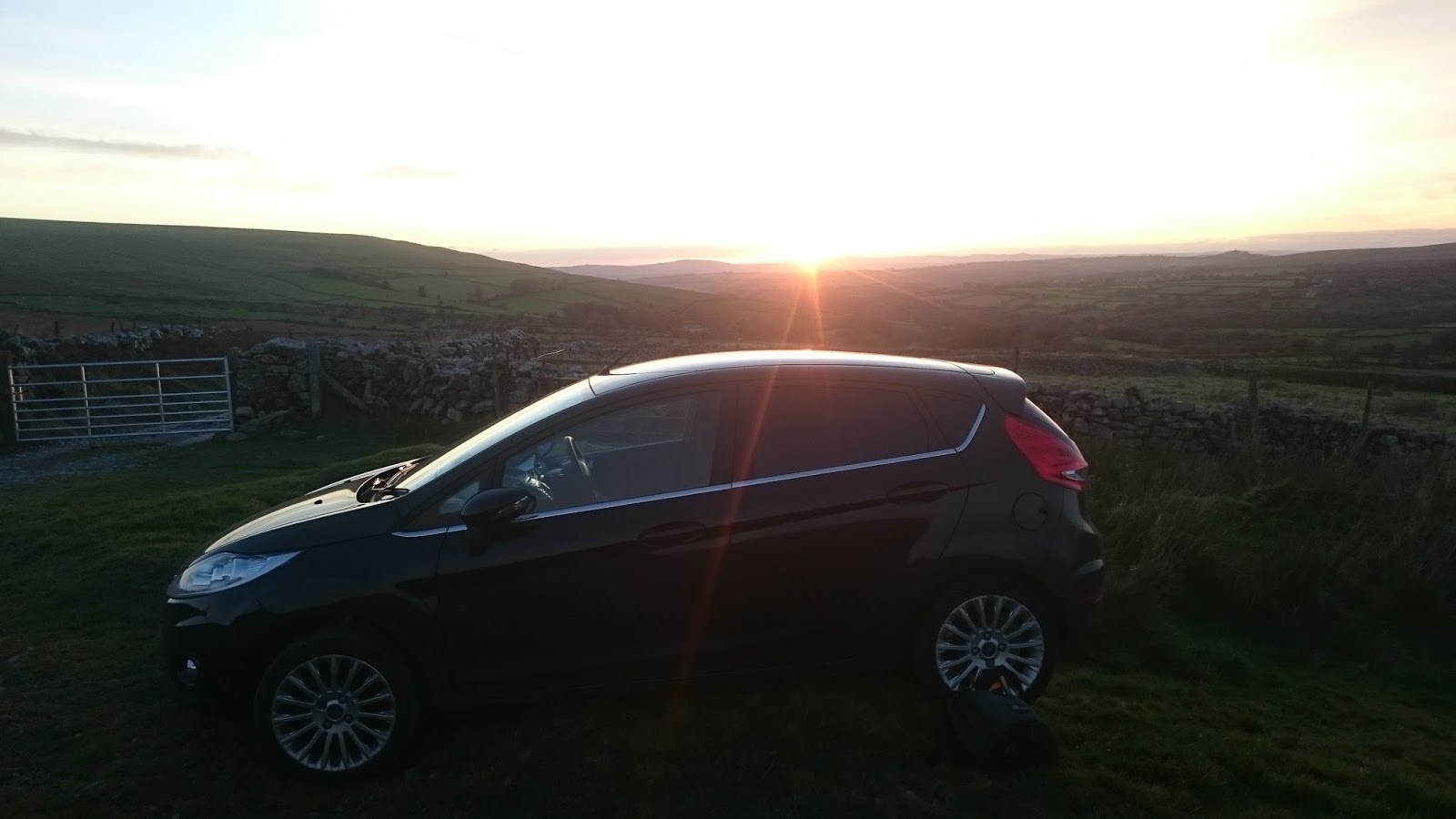
A warm glow fell upon the scene, which encouraged photography, but also quickened my step back towards the car.  I wanted to complete my 'circle' which involved the East bank of Baggator Brook and Standon Farm.  Suffice to say that I made it, and was back at the car just in time for sunset.

A cracking day all in all, with 21 boxes found, and the appetite for more Northern exposure well and truly whetted.


Wednesday, 16 November 2016

Milestones


I was delighted to see that, earlier this month, my blog passed 50000 page views.  A significant milestone in the life of an insignificant collection of ramblings!  Many thanks to everyone who reads my blog, and for taking an interest in Dartmoor Letterboxing.  My blog was always a bit of a self indulgence: an opportunity to form a record for my future self, as well as sharing my experiences and journeys with the World.  It has helped me to remain motivated, and keen to explore more that the park has to offer.  In the cases of the MOD plans and Mires project, it has provided a platform to share my findings.  

The blog is also a bit of a legacy for the 'The Upland Trotters', a family personal stamp which might - at some later date - make a reappearance in the Dartmoor's Letterbox visitor books...

I put this idea out there inspired by another recent momentous milestone in the lives of our family.  Last week my wife gave birth to a happy and healthy baby boy!  Our first child, and the second Cornishman (that we know of!) in the Barber clan, after my late father, John.  This one too is a sure-fire born Letterboxer - if ever I've seen one!

We'll have to give it until the Spring, at least, before my wife lets me pack him into his little carrier and take him out on the Moors.  Then I can introduce him to the joys of searching peat banks and patches of clitter around lone trees.  The heights and the scrambles of the North Moor.  The thrill of first-in-books and fleeting glimpses of deer and fox.  I hope you'll join me - through this blog - on our journey.  Exciting paths lay ahead: I cannot wait!!

Wednesday, 2 November 2016

Wednesday, 31 August 2016

Sort it out!

I returned from my latest walk (around Broad Falls and Heap O'Sinners) and lay my bag down.  I reached down deep in the rucksack to pluck out some the rubbish I'd gathered off the Moor during my day (#2minutelitterpick). I suddenly paused to consider what I'd been carrying all day that hadn't been used, or indeed touched.  It was then that I decided to have a proper sort out of my walking gear.

I carry a Macpac 20 litre rucksack.  It celebrates it's 9th birthday this year, but continues to serve me very well.  Only when siting a large number of boxes does my much bigger Lowe Alpine sack get a rare airing.  A meagre 20 litres focuses the mind.  I know I must carry the essentials.  For me, this includes a whistle, survival bag and first aid kit.  Though I pray I never need to use these in an emergency.  This is my fifth survival bag, but all predecessors have simply perished and corroded in their alternate roles as sit mat, snow sledge or simply as a flat rucksack back support.  On emptying my backpack, I learnt I'd somehow gained a 2nd first aid kit!  Neither were well stocked with anything useful.  So I took the chance to refresh the contents of just one, including a laminated 'In Case of Emergency' contact list, spare boot laces and blister plasters.

Waterproof overtrousers, now washed and reproofed are neatly stashed too.  I always take them - fulfilling the extra layer requirement to some extent, if not being used.

Rations.  I discovered a Foxes 'Rocky' chocolate bar stuck at the base of my rucksack, gathering fur and dust.  I've been vegan for almost a year, and cannot imagine eating this except in a dire emergency.  Dutifully binned, I replace it with a peanut bar.  I'd read somewhere that an emergency bar - however squashed - is a useful survival ration to maintain.

Letterboxing gear.  I keep this within a bright yellow carrier bag.  My wooden postcard box, a small selection of ink pads, and a clip lid box containing my personal and date stamps.  The carrier bag served as container, weather protector and an emergency beacon to wave.  Never let it be said that I didn't have my personal safety at heart when out walking!  The postcard box and personal stamps were in fab state.  However, the same couldn't be said about my ink pads.  Over the years, I've amassed a huge collection from the letterboxers in the family.  In 12 assorted colours, although for ease I tend to only carry 3 or 4 on each walk.  I have neglected many of them, and took the opportunity to discard the worst.  Those I retained needed a damn good clean and re-inking.  All - especially the yellow ones - were beginning to turn a universally brown colour. Eeeuggh!

Then I considered my Letterbox repair kit.  This consists of a spare book, which when combined with the clip lock box which my personal stamp lives in make a handy pathside fix.  My spare book had clearly gotten wet, then dried, then wet and dried again.  Time to update this, complete with a sandwich bag protection, me thinks.

The GPS.  Ah yes.  My Garmin Dakota 10, now 5 years young, still joins me on every walk.  It's spare AA batteries in their old Actimel yogurt pot too.  I occasionally bring it out to check GPS references on boxes I cannot find on bearings alone.  As a navigation aid, it is invaluable.  Almost as much as my compass, which went back in the bag too.  Only one compass though, with the permanent removal of a keyring compass/thermometer combo that hung from my rucksack front pocket zipper.

I should add that this is very much a Summer reboot of my bag.  I found an unused disposable handwarmer in my first aid kit, which I removed.  Hat and gloves will be added as necessary.  I allow space in my pack for one additional warm layer too, for when Autumn comes!

Refreshed, repaired, refilled.  Bring on the next walk, I say.

Considering your own gear? Check out GO Outdoors recommended hillwalking kit list here


Sunday, 17 July 2016

Up North....

I regularly visit Meldon Reservoir.  Its proximity to the A30 makes it a convenient stopover to refresh on my frequent drives up country in recent years.  The narrow lane from Okehampton thick with Summer growth leads to a National Park car park and the smashing views around the reservoir here - an easily accessible and home to a unique island nature reserve.

My walk was to take me up the West Okement, with views North and West towards Cornwall. I had to dig deep in the family archives to find clues to justify a walk up here.  Yet I was keen to explore the hills above the - now well worn - trails around Meldon.

The weather was terrific.  Hardly a breath of wind.  My mind wandered, considering the path closure on the Western side of the reservoir.  A different circular route was required today.  I would head out to Snipers Gully, Fishcombe Water and Black Tor, returning via Longstone Hill.

I was surrounded by iconic Dartmoor features. The Slipper Stones, Fordsland Ledge, Black-a-tor Copse, High Willhays. Features which make the West Okement such a gem in a granite setting.  My walk finished with a sighting of another iconic feature of the West Okement valley.  The Ring Ouzel.  In 2014, there were an estimated 15 breeding pairs of Ring Ouzel on Dartmoor, the most Southerly population in the country.  I spotted one individual hopping amongst the clitter near Black Tor, only the second time I've ever seen this elusive bird. Their numbers have been in global decline for decades, vulnerable to climate change.  An action plan is in place to support them on Dartmoor.

Another fascinating day out all round.  Unknown distance walked, 11 boxes located.

Who says that my blog lacks imagination, by the way!  The North and South moor have so much in common!